Scrabble Guide
Scrabble Strategy: Master Tile Values, Two-Letter Words and the 50-Point Bingo

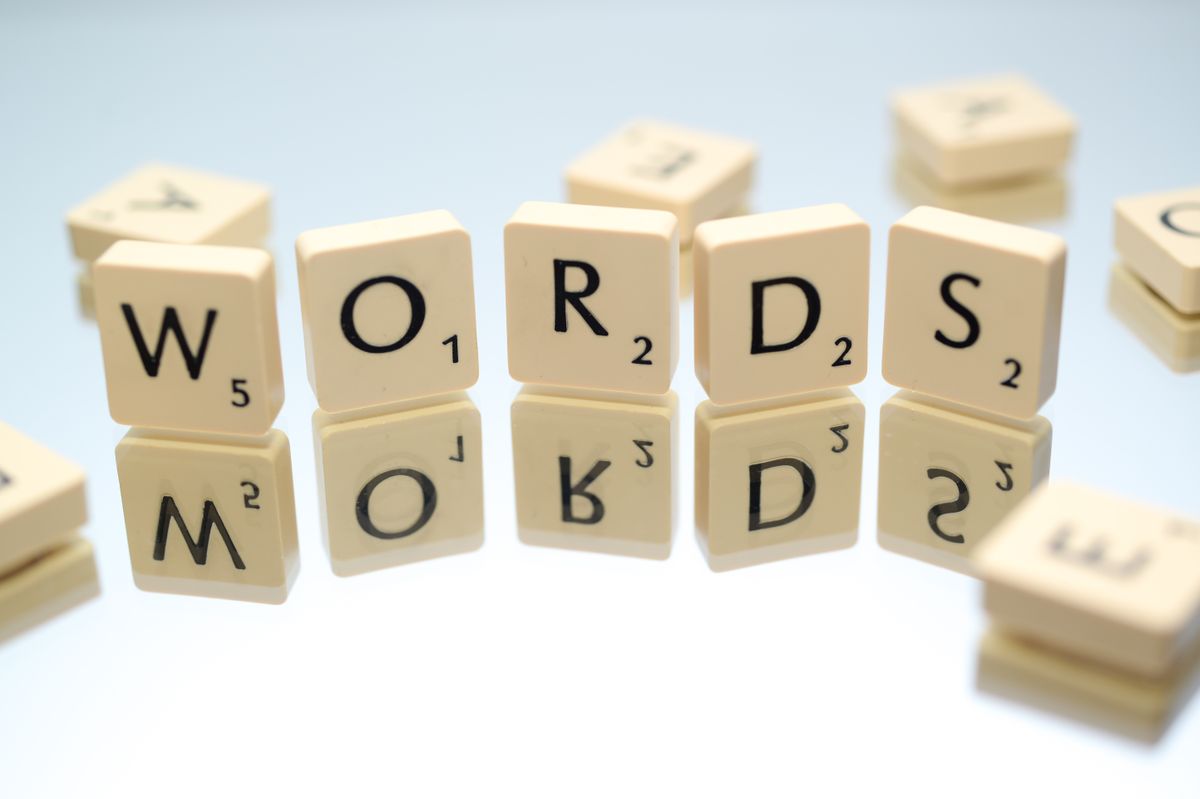
Photo via Pexels
Scrabble looks like a vocabulary contest. It's actually an arithmetic game wearing a vocabulary costume: the winner is almost always the player who squeezes more points out of the same words by putting high-value tiles on the right squares, keeping a flexible rack, and cashing a bingo or two. Here's the point-maximizing playbook — every word on this site shows both its Scrabble and Words With Friends score, so you can check any play as you read.
Every tile value (memorize the top and bottom)
| Points | Letters |
|---|---|
| 1 point | E, A, I, O, N, R, T, L, S, U |
| 2 points | D, G |
| 3 points | B, C, M, P |
| 4 points | F, H, V, W, Y |
| 5 points | K |
| 8 points | J, X |
| 10 points | Q, Z |
You don't need the middle memorized on day one — you need the extremes. The ten 1-point letters (handily, they spell out most of RETAINS) are your connective tissue; the five heavyweights (K, J, X, Q, Z) are your payload. Strategy is mostly about delivering payload onto premium squares using connective tissue. English has a surprising stock of vowel-free words.
Words With Friends re-prices the alphabet — vowels stay cheap but D, G and consonant clusters shift, so the best play can differ between games. Every word page here shows both scores side by side with a toggleable tile board.
Premium squares: where scores are actually made
A word's base score barely matters compared to where it lands:
- Letter multipliers (DL/TL) want your payload. An X on a triple-letter square is 24 points before the rest of the word exists. Placing QI or XI so the heavy tile hits a TL both ways (across and down) is the single most repeatable scoring move in the game.
- Word multipliers (DW/TW) want length. Multipliers apply after summing letters, so route your longest, heaviest word through them.
- Multipliers stack. A word crossing two double-word squares scores 4×. Triple-triples (two TWs) score 9× — these are the 200-point plays you see in tournament recaps.
- Defense counts double. Every square you leave open is one your opponent can use. Don't dangle a vowel next to a TL, and think twice before opening a lane to a TW for a mediocre score.
Two-letter words: the pro's secret weapon
Nothing separates casual and serious players faster than command of the two-letter word list. They turn blocked boards into parallel-play goldmines: laying a word flush alongside another scores every touching pair simultaneously.
Start with the heavy hitters — QI JO AX EX OX — then absorb the vowel-dump set that rescues terrible racks: AA AE AI OE. (Newer dictionaries also allow ZA and EW — check which word list your game uses.) Ten minutes a week with the full list and the three-letter words pays off in every single game you'll ever play.
Surviving the Q
The Q is worth 10 points and — statistically — costs most players more than it earns, because it strands without a U. Three escape hatches:
- QI is your default exit. Playable the moment there's an open I, ideally with the Q on a letter multiplier.
- Learn the U-free Q words. QAT QAID QOPH FAQIR QANAT TRANQ — browse all words containing Q to go deeper.
- Dump it late. If the bag is nearly empty and you're stuck, an exchange or even a cheap QI beats ending the game with 10 points subtracted from your score and added to your opponent's.
The same logic applies in milder form to the other heavyweights — keep the short saves loaded: ZAG ADZ for Z (see words with Z), JAB RAJ for J (words with J), and XI for X (words with X).
The bingo: 50 points for using all seven tiles
Play all seven tiles in one turn and you earn a 50-point bonus — a “bingo.” One bingo often decides the game; tournament players average one or two per game, and they do it through rack management, not luck:
Keep the RETAINS letters
The letters A, E, I, N, R, S and T combine into more seven-letter words than any other set. When you have a choice, spend duplicates and clunkers (V, C, W, U pairs) and hold this core. Racks like RETINAS are famous because they bingo dozens of ways — feed any seven letters to our unscramble tool and it shows every word they make, longest first, with scores.
Balance vowels and consonants
The classic target is 3 vowels + 4 consonants after every play. Five-plus vowels? Dump two with a word like ALOE or OIDIA rather than making a pretty 12-point play that leaves AEIOU behind.
Exchange without shame
A turn spent swapping a hopeless rack costs ~10 points of tempo and routinely earns back 30–50 when the refreshed rack bingos. If your rack can't score 20 now and can't bingo soon, trade it.
Learn hooks
A “hook” extends an existing word with one letter (HEAT→CHEAT, PLAY→PLAYS) letting you lay a full new word perpendicular to it. Front hooks are gold because opponents rarely defend them. When you spot a board word, check its word page — the anagram and pattern links show what it extends into, and the 7-letter word lists are pure bingo-study material.
Five habits that add 30+ points a game
- Score the cross-words before committing. Parallel plays frequently double your intended score — count every new pair formed.
- Track the S's and blanks. Four S's and two blanks exist. Spending an S for fewer than ~8 extra points is almost always wrong; blanks are for bingos, period.
- Leave yourself a comeback lane. Before playing, ask what the board looks like for your next rack too.
- Count the endgame. When the bag empties, unplayed tiles subtract from your score — dump heavies early in the endgame.
- Study your losses. After a game, run your worst rack through the word unscrambler and see what you missed. Five minutes of this beats an hour of word-list cramming.
Scrabble scoring FAQ
How many points is a bingo in Scrabble?
Using all seven of your tiles in a single play earns a 50-point bonus on top of the word's normal score. In Words With Friends the same feat earns 35 points.
Is QI really a valid Scrabble word?
Yes — QI (life force in Chinese philosophy) is valid in both major tournament dictionaries and is the most-played Q word in the game. Its plural QIS is also valid.
What are the best tiles to keep on my rack?
The RETAINS core: A, E, I, N, R, S, T. These 1-point letters form more bingos than any other combination. Keep them, and spend duplicates and awkward heavies early — unless a premium square is available for the heavy tile.
Do Scrabble and Words With Friends score words differently?
Yes. Tile values, premium square layouts and the bingo bonus (50 vs 35) all differ, so the best play in one game can be second-best in the other. Every word page on this site — like QUIZ — shows both scores with per-letter tile values.
What happens to unplayed tiles at the end of the game?
When one player uses their last tile with the bag empty, every opponent subtracts the sum of their remaining tiles — and in most rules that sum is added to the finishing player's score. A stranded Q is a 20-point swing.
Should I ever skip my turn to exchange tiles?
Yes — more often than most players do. If your rack can't score about 20 points now and has no bingo potential, exchanging (keep your best 2–3 letters, swap the rest) is statistically the stronger play.