Wordle Guide
Wordle Strategy: The Complete Guide to Starting Words, Second Guesses and Winning Streaks

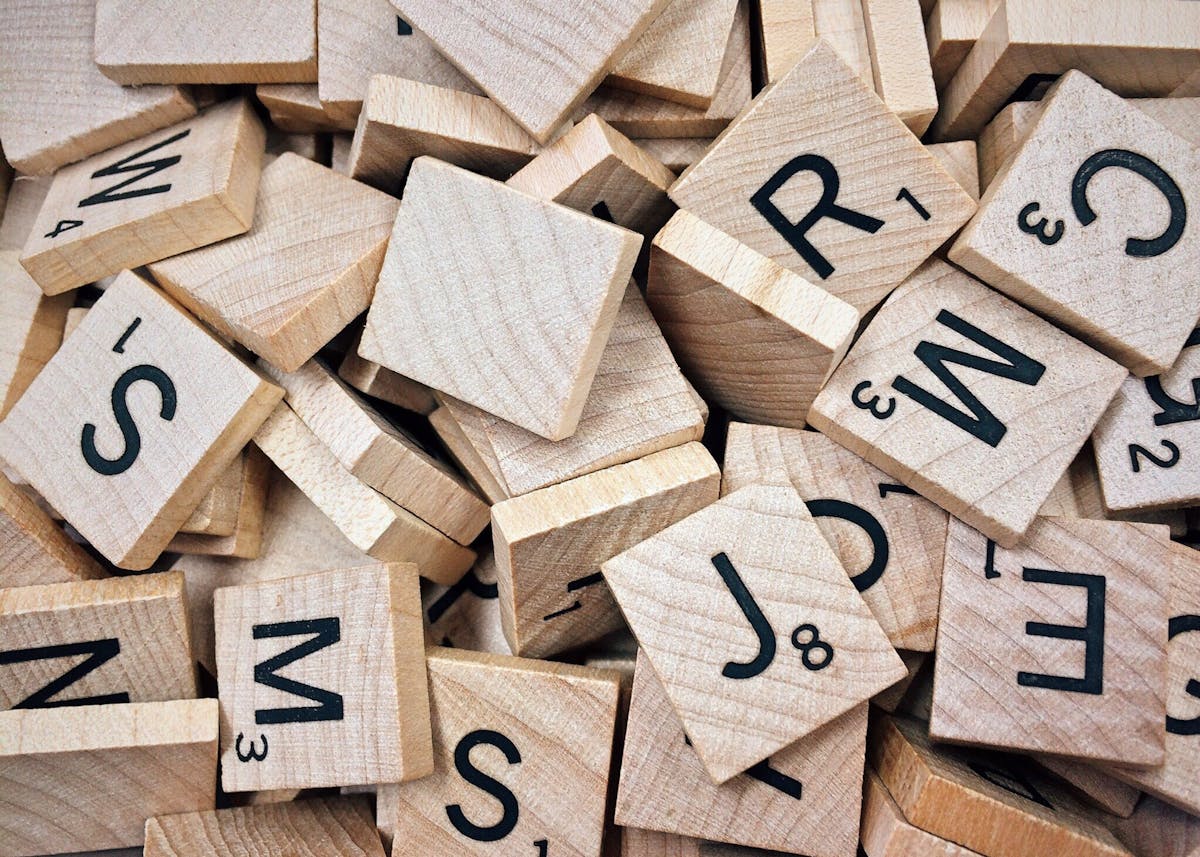
Wordle gives you six guesses to find one five-letter word — and every guess is a chance to either harvest information or waste it. The difference between a player who averages 4.8 guesses and one who averages 3.6 isn't vocabulary. It's strategy: what you open with, how you spend your second guess, and how you read the colors. This guide covers all of it, with data from the 8,600+ five-letter words in our dictionary.
How Wordle works (30-second refresher)
You have six tries to guess a secret five-letter word. After each guess, every tile changes color:
- A Green — right letter, right position. Lock it in.
- A Yellow — the letter is in the word, but somewhere else. Move it.
- A Gray — the letter isn't in the word at all. Eliminate it.
One wrinkle trips up even veterans: if you guess a word with a repeated letter (say, the two S's in SASSY) and the answer only contains one S, only one tile lights up. The second S goes gray. That's not a bug — it's telling you the exact count.
What makes a starting word great
Your first guess knows nothing, so its only job is to gather intelligence. Three things make an opener strong:
- Common letters. Across all five-letter words, the most frequent letters are E, A, R, O, T, L, I, S, N and C. An opener built from these tests the most likely candidates first. Browse words containing E or words containing A and you'll see just how dominant they are.
- Five unique letters. A repeated letter wastes a slot on turn one. CRANE tests five different letters; a word like MELEE tests only three.
- Letters in their most common positions. Getting a green is worth more than a yellow. E ends more five-letter words than any other letter (see five-letter words ending in E), and S starts the most (see five-letter words starting with S) — so a good opener puts its letters where they usually live.
The best Wordle starting words, ranked
These openers consistently leave the smallest pool of remaining answers. Any of them is a fine daily habit — pick one that suits your style. The letter-frequency logic behind ideal starters is worth ten minutes.
The famous bot favorite. R, A, N and E in strong positions, plus a common starting C. A ruthless all-rounder.
Preferred by many solver bots over CRANE. S up front, E at the end — both letters exactly where they most often appear.
Same letters as CRANE rearranged (they're anagrams) with T in the strongest opening consonant spots.
Three vowels and the two most common consonants. Maximizes yellow-or-green hits on turn one.
The same five letters as RAISE in different slots — another anagram pair worth alternating.
Four vowels in one guess. You'll know your vowel situation immediately — the trade-off is weak consonant coverage.
The other four-vowel opener. Great if your strategy is vowels first, consonants second.
S opening, E ending, R and T in the middle — a positional powerhouse and easy to remember.
Three vowels plus R and T. A close statistical cousin of RAISE with a stronger T.
Five top-ten letters, no repeats. Also sets up beautiful second-guess pairings (see below).
Trivia: MIT researchers crunched every possibility and crowned SALET (a medieval helmet) the mathematically optimal opener, with SOARE a former bot favorite. They win by a hair — but a word you'll actually remember beats a 0.01-guess edge you won't.
The second guess: where games are won
Most players waste turn two by immediately chasing their greens. Unless turn one gave you three or more colored tiles, the stronger play is usually a second word with five brand-new letters. Two guesses testing ten distinct letters will nearly always beat two guesses testing seven.
Classic high-coverage pairings:
- CRANE + MOIST — ten unique letters covering all five vowels' usual suspects
- SLATE + IRONY — hits I, O and Y, the vowels SLATE misses
- RAISE + CLOTH — consonant cleanup after a vowel-heavy opener
- LEAST + IRONY — ten letters that include the top six vowels-and-semivowels
- ADIEU + STORY — all five vowels plus Y, S, T and R inside two turns
From turn three onward, switch modes: stop gathering and start solving. Use every green and yellow you have, and never replay a gray letter.
Reading the board like a pro
Think in patterns, not letters
English five-letter words are built from predictable chunks. If you have a yellow H early, think digraphs: words starting with CH, SH or TH. A green T in slot four often means a -ST or -TH ending.
Know the common endings
A huge share of five-letter words funnel into a handful of endings. When you're stuck, scan these families:
- Words ending in -ER (baker, cider, tiger…)
- Words ending in -LY (badly, coyly, dimly…)
- Words ending in -ED (acted, boxed, caged…)
- Words ending in -ON (bacon, baron, colon…)
- All words ending in Y — Y ends far more Wordle answers than people expect
Letter-position cheat sheet
| Position | Most common letters |
|---|---|
| 1st | S, C, B, T, P, A — browse S-starters, C-starters, B-starters |
| 2nd | A, O, R, E, I, L, U |
| 3rd | A, I, O, E, U, R, N |
| 4th | E, N, S, A, L, I, R |
| 5th | E, Y, T, R, L, H, N — browse E-enders, T-enders, R-enders |
The four traps that end streaks
1. The repeated-letter blind spot
Roughly one in four answers contains a doubled letter, and almost nobody guesses them early. If your greens fit but nothing works, try doubles: LEVEL ERROR SASSY BOBBY ONION
2. The word-family ambush
You have _IGHT locked in green. Feels like a win — except LIGHT, MIGHT, NIGHT, RIGHT, SIGHT, TIGHT and FIGHT are all valid, and you only have three guesses left. The pro move: spend one guess on a word that tests several first letters at once — something like FROST checks F, R, S and T in a single turn instead of one at a time.
3. The plural crutch
Wordle's answer list almost never uses simple S-plurals (CATS, DOGS). Guessing them wastes the final S slot — though an S elsewhere in the word (like MOIST) is fair game.
4. The gray-letter relapse
Under time pressure, players re-use eliminated letters constantly. Slow down on turns four and five and audit your keyboard before committing — a guess with a known-gray letter is a guess thrown away.
Hard mode: the streak-builder's game
Hard mode forces every revealed hint to be used in subsequent guesses. That kills the ten-letters-in-two-turns strategy, so positioning matters even more:
- Open with a positionally strong word (SLATE or TRACE) rather than a vowel-dump like ADIEU — in hard mode, a yellow vowel can handcuff every later guess.
- Before guessing into a family (_IGHT, _OUND, _ATCH), count the surviving candidates. If more members remain than you have guesses, pick the statistically likeliest first letter — our five-letter word lists sort by exactly the frequency data you need.
- Never burn a guess that can't be the answer. In hard mode every guess is a bullet, not a scout.
Stuck? Turn the puzzle into a search
When you're down to two guesses and blanking, you're no longer playing a word game — you're playing a constraint puzzle. That's exactly what this site is built for:
- Greens in place? Browse the matching pattern list — e.g. green S opener → 5-letter words starting with S, green E ending → 5-letter words ending in E.
- Only yellows? Feed them to the word unscrambler with a few wildcards — entering your yellow letters plus
?blanks shows every word they can build, or try words containing your letter combo. - Narrowing a family? The browse index jumps straight to any length-plus-letter list, like 5-letter words starting with P.
House rule of thumb: solve today's puzzle yourself, then use the tools afterward to study what you missed. That's how the streak and the vocabulary grow.
Wordle strategy FAQ
What is statistically the best Wordle starting word?
MIT's exhaustive analysis found SALET optimal for average solve count, with CRANE and SLATE effectively tied just behind it. In practice, any five-unique-letter word built from E, A, R, O, T, L, S, N and C — like CRANE, SLATE or STARE — performs within a rounding error of optimal.
Should I use the same starting word every day?
Yes, if it's a strong one. A consistent opener lets you learn its follow-up patterns deeply — you'll instantly know your best second guess for every color pattern it produces. Consistency compounds; novelty doesn't.
Is it better to find vowels or consonants first?
Slight edge to a balanced opener (three consonants, two vowels) over a vowel-dump. Every five-letter word has at least one vowel and usually two, so vowels carry less information per tile than common consonants like S, T and R.
Can Wordle answers have repeated letters?
Absolutely — answers like ONION, VIVID and SASSY appear regularly. About a quarter of possible answers double a letter, so if your unique-letter candidates are exhausted, start doubling.
Does Wordle use plurals ending in S?
The answer list avoids simple add-an-S plurals and add-an-ED past tenses of four-letter words. They remain valid guesses though, which makes them decent information-gathering plays — just not answer candidates.
What are the hardest Wordle words?
The infamous streak-killers combine rare letters with word families: JAZZY, FUZZY, NYMPH (no true vowel), and family members like FOUND/BOUND/HOUND that survive elimination together. When your solve rate matters, always attack families with a multi-letter test word first.