Crosswords Guide
The Crossword Solver's Handbook: From First Clue to Finished Grid

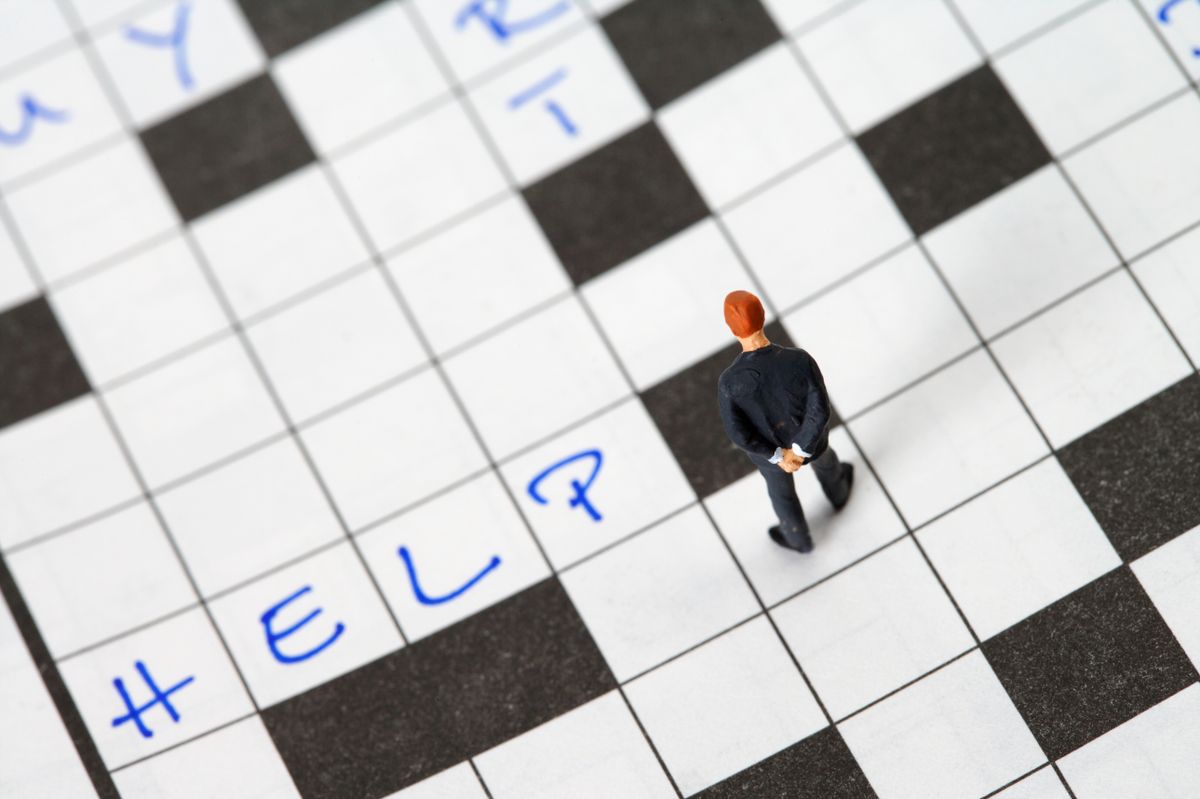
Photo via Pexels
A crossword clue is a tiny legal document: every word in it is doing a job, and the setter is bound by rules they cannot break. Once you know the rules, a clue stops being a riddle and becomes a set of instructions. This handbook covers the contract, the opening moves, the crossing engine that actually finishes grids, and what to do when a corner goes dark.
Read the clue like a contract
The clue and its answer must agree grammatically — that agreement is free information:
- Tense and number carry over. A past-tense clue has a past-tense answer; “Birds’ homes” is plural, so pencil the final S immediately. A clue ending in “-ing” usually wants an -ING answer.
- Part of speech carries over too. “Run” clueing a noun (a run in baseball) is legal; the clue will read oddly on purpose. If a clue feels ungrammatical, you're probably parsing the wrong sense.
- Abbreviated clue, abbreviated answer. “Sch. group” → PTA. Any “Abbr.”, initialism or shortened word in the clue licenses one in the answer.
- A question mark means wordplay. “Letter opener?” isn't about mail — it's the first letter of a word. Treat every “?” as “think sideways.”
- Foreign flag, foreign answer. “Friend, in Paris” → AMI. The language cue is never decorative.
- “Say” / “e.g.” / “for one” mean the clue is an example of a broader category the answer names.
Where to start a grid (it isn't 1-Across)
Speed solvers don't read clues in order — they hunt guaranteed letters first:
- Fill-in-the-blanks. “___ Vegas”-style clues are near-certainties. Always sweep them first.
- Three- and four-letter answers. Short slots have few candidates — skim the 3-letter and 4-letter word lists sometime and you'll recognize how small the pool really is.
- Facts you simply know. Names, dates, capitals — bank them, even in far corners. Every certain answer is a seed crystal.
- Skip anything uncertain. A wrong answer written confidently is the most expensive mistake in crosswords; it poisons every crossing.
Solving mostly American-style puzzles? The difficulty ramp is a schedule, not a mood: Monday grids are the easiest and Saturday's are the hardest (Sunday is bigger, not harder). If you're learning, do Mondays until they're routine, then climb one weekday at a time.
Crossings are the engine
Amateurs solve clues; finishers solve letters. Every answer you place hands you free letters in three, four, five crossing slots — and a clue that was opaque with zero letters is often trivial with two:
- Alternate directions constantly. Place an Across, immediately test its Downs. Momentum in crosswords is literal: work outward from what exists.
- Check letters before committing. If your candidate makes a crossing start with an impossible pair (a lone Q with no U coming, a word ending in J), the candidate is wrong — crossings are a free proofreader.
- Uncommon letters are gifts. A J, X or Z placed in the grid narrows its crossing to a handful of words — browse words with X or words with J and see how short those lists are.
Learn the crosswordese (everyone does eventually)
Grids need short, vowel-heavy words to hold their corners together, so the same odd little words appear over and over. Meeting them ahead of time is the single fastest skill upgrade in crosswords: Crossword habits help here too — especially knowing where to start a grid.
ERA ALOE ARIA EPEE ETUI OLEO OLIO EKE
A fencing sword, a needle case, old-fashioned margarine, a miscellany — nobody says these words at dinner, but they hold up half the grids in America. When you meet a new one, spend ten seconds on its word page; the definition plus one glance at its letters is usually enough to keep it forever.
Crack the theme early
In themed puzzles the longest answers share a gimmick — puns on a phrase, hidden words, added letters. Read the puzzle's title first (it's a hint, always), then attack one long answer via its crossings. The moment you see the gimmick, the other theme answers become half-solved. Two warnings: circled squares mean the gimmick lives in specific letters, and if a crossing seems impossible yet certain, consider a rebus — multiple letters sharing one square.
The pattern attack (for when a slot is half-full)
A half-filled slot is a solvable equation. Say you have four letters reading _A_E:
- Run the alphabet on the first blank — out loud, mechanically: BAKE-ish sounds, CAKE, DALE, FACE… Your ear finds candidates your eye misses.
- Use the ending as an anchor. Our ending-with search takes any letter combo, and the by-length lists keep the candidates scannable.
- Know your starts. A slot beginning with Q is practically self-solving — QU- words are a short, memorable family.
- Cryptic-style clues flag anagrams with words like “mixed,” “broken” or “confused” — our anagram guide covers the untangling method, and the unscrambler checks your work.
Is looking things up cheating?
Here's the grown-up answer: a crossword is a conversation between you and the setter, and you set the terms. Checking a fact you never knew (a 1970s actress, a river in Asia) teaches you something and keeps the puzzle moving; revealing a letter you could have reasoned out steals from you. Our house rule scales to crosswords perfectly: struggle honestly first, then look up what beat you — on this site, straight to the word page — so it never beats you again.
Crossword FAQ
What does a question mark at the end of a clue mean?
Wordplay. The clue's surface reading is a misdirection, and the answer reinterprets it — puns, literal readings of idioms, or unexpected senses of a word. “Letter opener?” → the letter A. When you see “?”, stop reading literally.
What is crosswordese?
The set of short, vowel-rich words — ETUI, OLIO, EPEE — that appear constantly in grids because their letters make corners work, even though almost nobody uses them in speech. Learning a few dozen of them dramatically speeds up solving.
Which day's crossword should a beginner start with?
Monday, for American puzzles that ramp through the week — it's built to be finished. Stay there until Mondays feel easy, then move to Tuesday. Sunday is Thursday-ish difficulty in a bigger grid, not the week's hardest.
What is a rebus in crosswords?
A square that holds more than one letter — the answer HEARTBEAT might cross another answer sharing a single square containing all of HEART. If a crossing is definitely right but doesn't fit, think rebus.
Is it cheating to look up answers?
It's your puzzle. The useful line: look up facts you never knew (you'll learn them), reason out everything you can. Constant reveals teach nothing; targeted lookups — like reading the word page for a term that stumped you — compound into skill.
How do I get faster at crosswords?
Three compounding habits: sweep fill-in-the-blank and short clues first, always work crossings off every letter you place, and review what beat you afterward. Speed is downstream of recognition, and recognition comes from the review.